
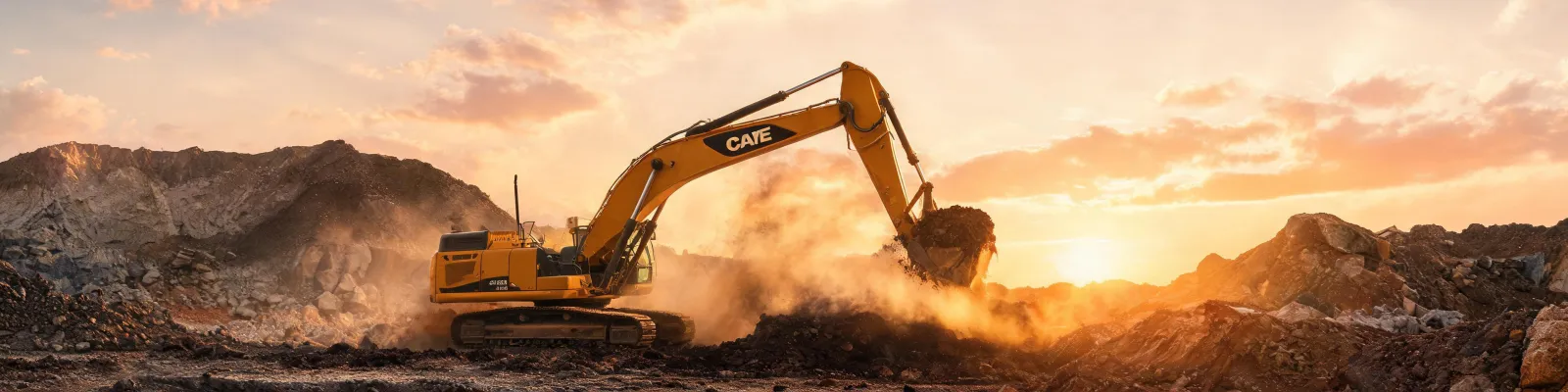

Charlotte Avery is an earth-moving machinery analyst covering excavators, mini excavators, loaders, skid steers, dozers, graders, compactors, and attachments. She uses ISO 6165 machine classification and ISO 20474-1 safety requirements while examining operating mass, rated payload, breakout force, ground pressure, stability, visibility, guarding, and attachment compatibility. Her work helps contractors and fleet buyers match machine size, undercarriage, transport limits, and protective features to terrain, duty cycle, and jobsite access.
There is no single answer to 'what should a compact excavator wholesale order cost?' I used to think there was. When I first started sourcing machines and attachments, I assumed the smartest play was to find the lowest unit price and build relationships from there. That approach cost me a little over $20,000 in rework, freight, and lost credibility before I figured out the real rule: the answer depends on your scenario, and the scenario decides what 'good' means.
I have handled wholesale equipment and attachment orders for the better part of eight years, and I have made a few memorable mistakes. This is the checklist I wish someone had handed me before my first big order.
Three Buying Scenarios, One Cost Question
The first thing to understand is that 'wholesale cost' is not a single number. It changes based on what you are buying, who you are buying it for, and whose brand goes on the final product.
- Scenario A: You're a dealer or distributor stocking Case-branded compact excavators and attachments.
- Scenario B: You're a contractor or rental company buying compact excavators and backhoe attachments for your own fleet.
- Scenario C: You're buying through a PC excavator OEM arrangement or building a backhoe attachment private label line under your own brand.
If you're not sure which one you're in, skip ahead to the three-question filter at the end. That is the part that saves you the most time.
Scenario A: Dealer or Distributor Stocking Case-Branded Equipment
If you carry the Case name, you're not just buying iron. You're buying a reputation that came before you. Buyers on a jobsite see that logo and assume the machine will start, dig, and hold up. That goodwill is real, and it is part of why Case compact excavators keep wholesale value.
What most first-time dealers get wrong is focus. They're so busy comparing base prices that they forget to confirm the machine is spec'd for the attachment. I made this exact mistake in 2019. I ordered backhoe attachments for a compact excavator order without matching the hydraulic flow rate to the machines. The attachments physically fit, but on paper they needed more flow than the machines could deliver. We had to ship everything back and swap flow-control valves. Cost: $3,800 plus a two-week delay. The worst part? A customer walked around the machine while it sat in the yard and asked, 'Why do these buckets look too big for the arm?' That's the moment I realized how quickly quality perception turns.
For dealer-level wholesale pricing, here is the range I saw in my Q4 2025 sourcing round: a 3.5 to 6 metric ton Case compact excavator typically quoted between $45,000 and $95,000, depending on options, buckets, attachments, and warranty. That's not a price promise—verify current numbers with your Case wholesale rep. It's more useful to know the margin drivers: base model availability, hydraulic options, and how many attachments you bundle into the deal.
Dealer mistake to avoid: don't let the sales side of your brain override the parts side. If you're stocking machines, stock the quick-wear items too. A machine sitting out of service waiting for a $120 part is the fastest way to kill your reputation.
Scenario B: Contractor or Rental Fleet Buying Wholesale
Hiring the machine but not your own brand? Then the cost guide changes. You're not as worried about badge value; you're worried about uptime, and you're worried about the attachment matching every platform in the yard.
When I put together a compact excavator wholesale cost guide for fleet buyers, I always break it into five lines:
- Base machine price
- Bucket / backhoe attachment costs
- Freight, insurance, and import fees
- Compliance documentation and emissions certification
- Warranty, spare parts, and expected wear items
The part that often surprises people is line two. On equipment purchases, attachments can eat 15% to 30% of the total budget. That's not a bad thing—it's a reminder that the machine only makes money when the attachment fits the job.
Here's an experience that flipped my thinking. Everything I read said 'buy attachments generic, because they all do the same thing.' My experience with rental fleets says otherwise. The cheap backhoe attachment worked, but it was banged up, had a mismatched pin size on one mount, and the paint flaked off so fast that the rental counter lost count of how many times customers asked for a different machine. We didn't just lose rental revenue; we lost the perception that we were a professional outfit. The upgrade to a properly spec'd attachment was not a luxury.
One compliance note. It might sound strange to talk about an EPA lawsuit in an excavator buying guide, but the San Francisco EPA sewage case is a good example of how regulation creates sudden demand. After the enforcement action, the city and local contractors needed smaller, compliant machines and attachments to fit in existing streets and work around buried utilities. If you supply rental equipment, the buyers in municipal projects often have to show emissions certificates and hydraulic spec sheets before they'll rent. Keep those docs ready. Verify current EPA/CARB requirements at EPA.gov before you quote—don't rely on old paperwork.
Fleet buyers: private-label backhoe attachments can be tempting, especially if you want to keep your name visible on the lot. My advice? Only do it if your company name is already recognized for quality. Otherwise, you're paying extra for branding that doesn't carry weight yet. It's a quality perception problem, not a printing problem.
Scenario C: PC Excavator OEM and Backhoe Attachment Private Label
Now we get to the part where I've spent most of my career. A PC excavator OEM arrangement—private-contract OEM, where your brand goes on a machine or component built by a factory—can be a smart move. It's also where the biggest mistakes happen, because you're not just buying a product. You're buying a manufacturer's process.
Backhoe attachment private label is the most common entry point. They're relatively simple products, lower-risk than a full excavator, and easier to brand. But simple doesn't mean automatic.
In September 2022, I submitted a private-label attachment order with a sample that looked perfect. The bucket was clean, the edges were straight, and the paint matched the Pantone reference. I approved it, paid the first 50%, and waited. When the container arrived, 47 buckets had misaligned hinge plates. The sample had been hand-fabricated; the production run had been jigged wrong. We discovered it when our own warehouse team tried to install the buckets on a compact excavator and the pin holes didn't line up. The rework cost $890 per unit plus shipping delays. I still kick myself for not scheduling a mid-production inspection. The lesson: sample approval is not process approval.
Some recognized manufacturers, including Case, run OEM and private-label programs alongside their core wholesale business. That can be useful if you want the engineering backup of a big brand with your own identity on the machine. But only if you treat it as a manufacturing process, not a sticker-swap.
For PC excavator OEM buyers, add these checks to your contract:
- Third-party inspection at 50% production, not just pre-shipment
- Paint and decal standards with Pantone references
- Hydraulic specs and mounting tolerances in writing
- Certificates of conformance for emissions and safety
- Minimum order quantity and lead time broken down by stage
A factory's willingness to accept mid-production inspection says a lot. I've had suppliers push back, and in every case, pushing back was a red flag. The ones with a clean process are proud to show it.
Branding detail: if you're applying your logo to buckets or machines, specify commercial print standards. Decal art should be 300 DPI at final size. Anything less, and the edges look fuzzy. And for paint, industry standard color tolerance is Delta E < 2 for brand-critical colors; above 4, anyone can tell. A slightly different orange or yellow makes the product look off-brand, even if the steel is perfect. Reference: Pantone Color Matching System guidelines.
'It's just the color' is the phrase that costs you customers. The first thing a buyer sees is the brand, and the first thing they remember is whether the brand looked cheap.
How to Tell Which Scenario You're Really In
Here's the practical filter. Answer these three questions honestly:
- If you resell under the manufacturer's name and the manufacturer's warranty, you're in Scenario A. Stop trying to build a private-label brand on day one.
- If you own the machine and rent it out to others, you're in Scenario B. Prioritize parts availability and attachment compatibility over branding.
- If your name goes on the product, you're in Scenario C. Budget for engineering, inspection, and QC, not just unit cost.
If you're in more than one, start with the scenario that represents the largest annual spend. Then use that as the baseline for the others. For 80% of wholesale buyers, that's a rental fleet or a dealer stock order, not a private-label machine line.
I used to think a cost guide was supposed to give one answer. After eight years, I now know the answer is a branching set of decisions. The good news? Once you know your scenario, the process is straightforward.
There's something satisfying about opening a container of attachments with your own brand on the side. When everything lines up—hydraulics, paint, pins, paperwork—it feels like the entire supply chain clicked into place. That feeling is worth the extra time spent on checklists. It's also worth the cost of doing it right the first time.