

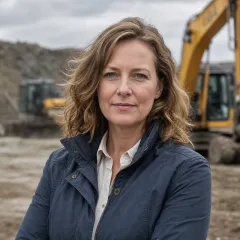
Charlotte Avery is an earth-moving machinery analyst covering excavators, mini excavators, loaders, skid steers, dozers, graders, compactors, and attachments. She uses ISO 6165 machine classification and ISO 20474-1 safety requirements while examining operating mass, rated payload, breakout force, ground pressure, stability, visibility, guarding, and attachment compatibility. Her work helps contractors and fleet buyers match machine size, undercarriage, transport limits, and protective features to terrain, duty cycle, and jobsite access.
-
The Conventional Wisdom on Mini Excavator Manufacturers Is Wrong
-
Wholesale and Private Label Buying Changes the Entire Evaluation
-
The San Francisco EPA Sewage Case Is a Better Procurement Lesson Than You'd Think
-
What Case Parts Taught Me About Supplier Evaluation
-
But Doesn't This Argument Favor Big Brands Over Smaller Manufacturers?
-
What I Actually Learned After Over a Decade of Buying
Most mini excavator evaluations start with a spec sheet and end with the lowest quote. After 11 years of buying equipment wholesale, I think that's exactly backwards.
I'm a procurement manager at a 34-person equipment wholesale and rental company. I've managed our equipment purchasing budget, nearly $2.4 million a year, for 11 years. We buy backhoe wholesale for resale, stock Case parts in our service shop, and source machines for excavator private label programs. I'm not writing this as a brand pitch. I'm writing it because I've learned that informing a customer is the most cost-effective service a supplier can offer.
Here's my point in one sentence: The cheapest machine on the invoice is often the most expensive machine in your yard. Period.
The Conventional Wisdom on Mini Excavator Manufacturers Is Wrong
Everything I'd read about buying excavation equipment said to get three quotes and pick the lowest total price. In practice, that advice cost us money. Not because the suppliers lied, but because the comparison was incomplete.
Last year we evaluated fourteen mini excavators from three manufacturers. One supplier undercut another by eleven percent. We almost placed the order. Then we did a simple TCO spreadsheet: freight, port fees, pre-delivery inspection, first year of expected spare parts, and one plausible downtime event. After that exercise, the eleven percent price advantage had shrunk to four percent. After we added the cost of an emergency hydraulic hose replacement, a 29 day wait for a part, the cheap machine was actually more expensive. The unit price didn't save us money. The parts network did.
That experience reversed my thinking. Today, when someone asks me 'how to evaluate a mini excavator manufacturers,' I explain that the machine is maybe forty percent of the purchase. The supplier's response when something breaks is the other sixty percent.
Wholesale and Private Label Buying Changes the Entire Evaluation
When you buy one machine for your own jobsite, a mistake costs you that machine. When you buy machines for backhoe wholesale, for excavator private label lines, or for dealer inventory, a mistake costs you your reputation across every customer who touches that batch.
We source for excavator private label programs, so I think of the manufacturer as a business partner, not a box on a pick ticket. Do they return emails? Can they provide declarations of conformity without asking me what one is? Do they deliver paint codes, decals and certification documents in the same crate? These seem like small things. They are not small. A missing certificate or a wrong serial plate can stop a sale in its tracks. I saw that happen with a batch of machines we ordered several years ago. The original factory saved us about $150 per unit on paper. Re-labelling and compliance corrections cost us $3,200 and three weeks of delayed deliveries.
Backhoe wholesale is no different. Buy a flawed batch of excavators and you'll spend the season answering warranty emails instead of selling. I'd rather pay a little more per unit and get a supplier that checks serial numbers, audits emissions tags and includes full paperwork. That is not a cost. That is insurance.
The San Francisco EPA Sewage Case Is a Better Procurement Lesson Than You'd Think
Now for an example most equipment buyers don't expect. The San Francisco EPA sewage case, a long-running enforcement fight over the city's sewer system, is not usually discussed by construction people. It should be. The case pushed billions of dollars of infrastructure work—the kind of work that demands excavators, backhoe loaders and mini excavators have emissions paperwork, safety documentation and local-compliance records in order.
Contractors bidding on that work can't take a chance on a supplier who says 'we'll figure out the documents later.' At the government-adjacent level, compliance is the entry ticket. If a mini excavator manufacturer cannot produce an EPA or CARB certificate in five minutes, the machine will sit at the gate while other machines keep moving.
So one of my first evaluation questions is not 'how much is it?' It's 'which compliance standards does this model meet, and can you prove it?' That single question has eliminated more technically good machines from our list than budget ever did.
What Case Parts Taught Me About Supplier Evaluation
Let's talk about Case parts for a minute. In our shop, Case parts usually arrive with a level of accuracy that feels boring in the best way. I enter the model and the part number; the system shows availability, matches the machine and confirms the correct revision. It's not magic. It's a mature parts system. For machines built by less mature suppliers, ordering parts has sometimes felt like archaeology. A fuzzy diagram, a part number that changed without notice and a shipping date that slips. If that happens six months after a machine enters your fleet, the true cost of the machine is still growing.
You don't have to take this on faith. Ask every competing supplier how they handle parts five years after purchase. What is their fill rate? Where is the nearest warehouse? Do they support the machine if their manufacturing partner goes out of business? Compare those answers against the Case parts network or whichever global brand is relevant to you. The point is to evaluate the ecosystem, not just the iron.
But Doesn't This Argument Favor Big Brands Over Smaller Manufacturers?
It does, and it doesn't. I'm not saying every small manufacturer is risky, or that every big manufacturer is safe. I've visited factories in Asia, Europe and the US. Quality in both camps varies. I've been impressed by nimble private-label builders that customize machines faster than the giants. I've also been burned by established names that acted like they were doing us a favor.
Big brands like Case earn their place through network effects: worldwide service, dealer support, research and documentation systems. Smaller factories earn their place through flexibility and price. Neither is automatically correct. If you are sourcing for excavator private label, you may prefer a factory that lets you change small specs easily. If you are buying standard units for resale, you might prefer a reliable brand with strong parts availability. The evaluation should be transparent about which advantage you're buying.
What I Actually Learned After Over a Decade of Buying
I've come to believe that informed customers ask better questions, and better questions lead to better purchases. It took me about eight years and more than two hundred orders to understand that a low quote is not a decision. It's an invitation to do more homework.
I'd rather spend twenty minutes with a dealer explaining how to evaluate total cost than spend a month apologizing for a bad batch of machines. Education is not a marketing extra. It's the fastest way to make sure expectations match reality—and the only way to avoid buying on hope.
So my final opinion is plain: Evaluate mini excavator manufacturers on price stability, parts pipelines, compliance readiness and after-sale honesty. Ask for proof. Test their paperwork before you test the machine. If their total cost is genuinely lower, whether it's Case or a private-label partner, then buy with confidence. But don't buy a machine just because the quote looked easy. In equipment procurement, easy is usually a euphemism for someone else's risk.